The Blocks
PricingFree Apps & ToolsBlogAbout us
+1 347-962-1064Login

Features

  • AI Estimates
  • Takeoffs
  • Budgets
  • Bids & Proposals
  • Cost Catalog
  • CRM & Contacts

Who We Serve

  • For Estimators
  • For General Contractors
  • For Subcontractors

By Trade

  • All trades
  • For Roofers
  • For Electricians
  • For Plumbers
  • For HVAC Contractors
  • For Concrete Contractors
  • For Drywall Contractors

Resources

  • Free Construction Apps & Online Tools
  • Construction Calculators
  • Field Tools
  • Blog

Company

  • About us
  • LinkedIn
  • +1 347-962-1064
  • Privacy Policy
  • Terms of Use

© 2026 The Blocks. All rights reserved.

Brick / Block Calculator

Brick and block calculator — calculate bricks, mortar, and cement for walls with bond pattern support.

Brick / Block Calculator

sq ft
mm
sq ft
%

Results

Bricks needed
Mortar volume
Cement bags (1:4 mix)
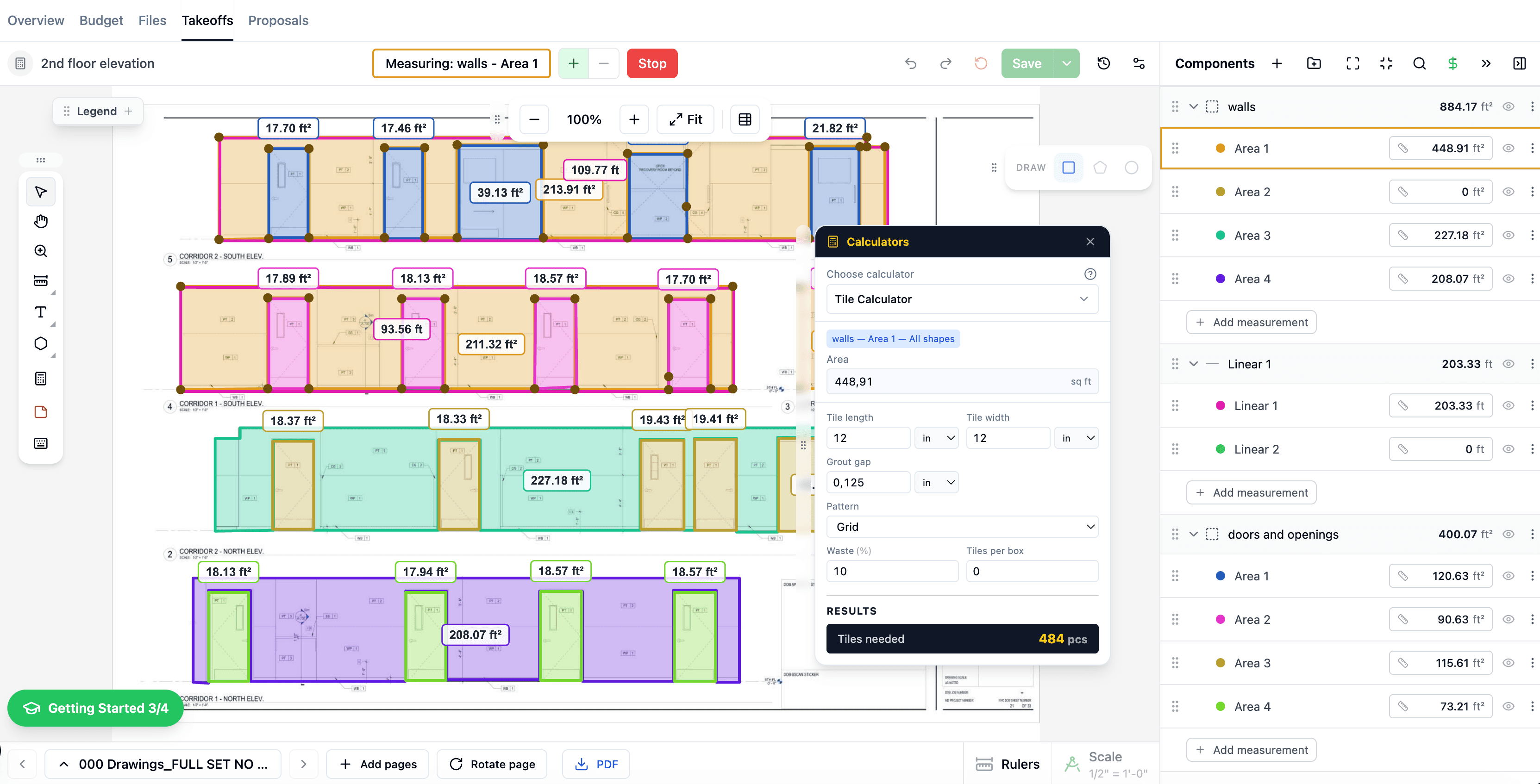
The Blocks calculator on desktop
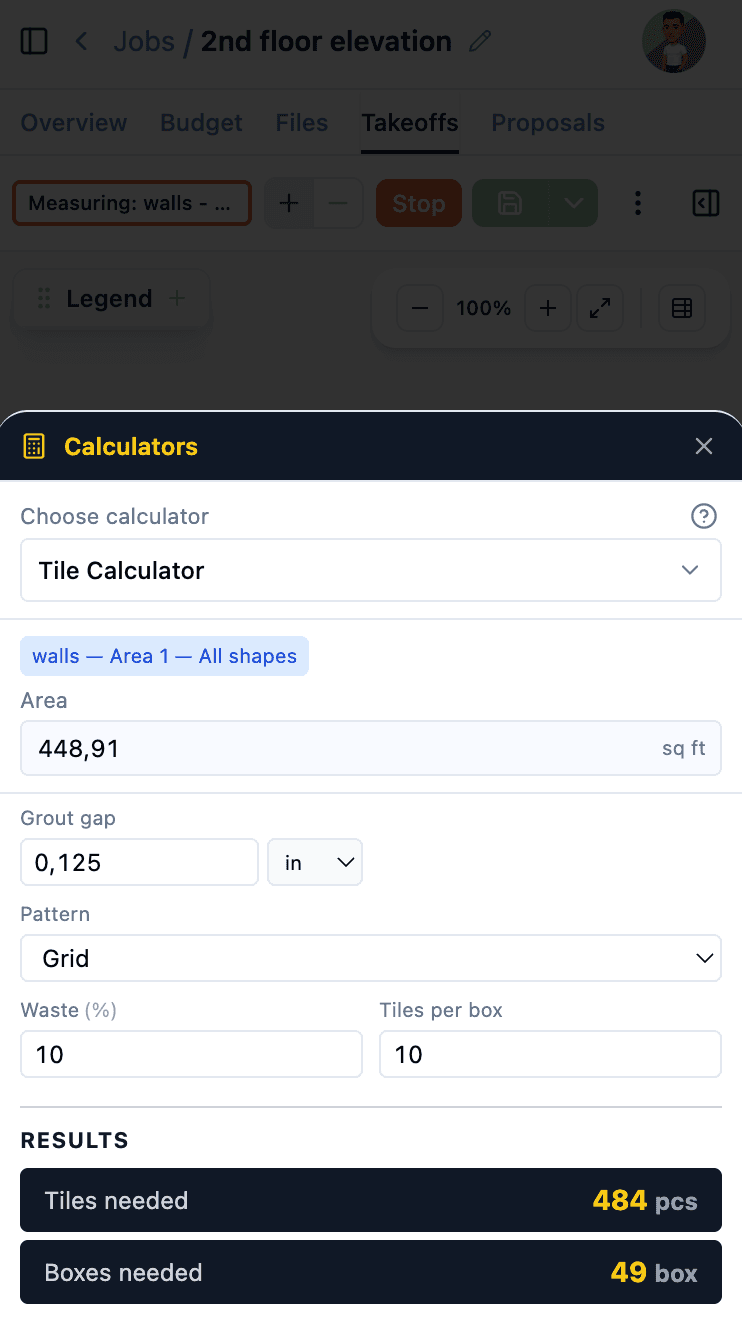
The Blocks calculator on mobile

Need Construction Business Software?

These calculators are even more powerful inside The Blocks. During takeoffs, material quantities are calculated automatically from your measurements — no manual entry needed.

Learn more about Digital Takeoffs, AI Estimates, and Cost Catalog.

  • Web access — desktop, tablet & mobile
  • AI-powered plan takeoffs
  • Manual markup tools
  • Cost estimating & budgets
  • Bid management & proposals
  • CRM & contact management
MonthlyAnnualSave 20%
Seats:
$119 per seat × 1$119/mo
Total
$119/mo

$1,428/yr

How to Use This Calculator

Formula

bricksPerM² = (1000 / (brickH + joint)) × (1000 / (brickL + joint)) × bondMultipliernetArea = grossArea − (openings × openingArea)bricksNeeded = ⌈netArea(m²) × bricksPerM² × (1 + waste/100)⌉mortarVolume = netArea × mortarPerM² × bondMultipliercementBags = ⌈mortarVolume × 7⌉ (1:4 mix)

Parameters

Brick Type
Standard (215×65mm), modular, CMU 4/6/8 inch.
Bond Pattern
Stretcher (1×), English (2×), Flemish (1.5×), Stack (1×).
Mortar Joint
Joint thickness in mm (default: 10).
Openings
Number of doors/windows to deduct.
Area per Opening
Average opening area in sq ft.
Waste %
Extra for cuts and breakage.

Results

Bricks Needed
Total bricks/blocks including waste.
Mortar Volume
Mortar needed in cubic meters.
Cement Bags
Bags of cement for 1:4 mortar mix.

Example

Garden Wall

200 sq ft, standard brick, stretcher bond, 10mm joints, no openings, 5% waste

netArea = 200 sq ft = 18.58 m²bricksPerM² = (1000/75) × (1000/225) = 59.26bricksNeeded = ⌈18.58 × 59.26 × 1.05⌉ = 1,156 pcs

Common Use Cases

  • Garden and boundary walls
  • Retaining walls
  • House extensions and new builds
  • Commercial masonry projects

Notes

  • English bond uses roughly double the bricks of stretcher bond.
  • CMU blocks are larger — fewer units per area but heavier.
  • Always order 5-10% extra for cuts and breakage.
  • Mortar types: Type N (residential above-grade, 750 psi), Type S (below-grade, exterior, freeze climate, 1,800 psi), Type M (heavy load / structural, 2,500 psi).
  • Brick yields per ton of mortar (10mm joints): ~750 standard bricks or ~150 CMU blocks. A standard 4-bag mixer batch lays ~150 bricks at a time.

Frequently Asked Questions

Related Calculators

Concrete Calculator

Calculate cubic yards and 80lb bags of concrete for slabs, patios, and footings.

Area

Rebar Calculator

Estimate rebar bars and linear feet for reinforced concrete slabs.

Area

Excavation Calculator

Calculate bank and loose volumes, truck loads, and soil weight for excavation.

Area
Zaur Zhanabekov

Get in Touch

Zaur Zhanabekov

Sales

+1 347-962-1064zaur@theblocks.app