The Blocks
Construction software for the 80%, not the 500-person GC
Most construction management software targets enterprise GCs. Most US contractors aren't enterprise. Here's why small firms stay stuck on spreadsheets.
Take Warren. He runs a five-person concrete contractor in suburban Ohio. He does the estimating, writes the proposals, bids the jobs, and runs the crews himself. There's one office person who handles invoicing. The crew has worked together for years. There's no IT team. No procurement office. No project manager between him and the client.
For Warren, most "construction management software" is the wrong shape. The permission systems assume he has enough employees to need access tiers — he has five, and they all trust each other. The approval workflows assume there's a chain of managers above him. There isn't. He is the chain. The integration hub assumes he runs Oracle or SAP. He runs QuickBooks. That's the integration story.
If you read any "best construction management software" list, the same handful of names show up at the top. They're well-built products. They run real projects at real construction companies. They also share something else in common — they were architected for, and priced for, enterprise general contractors.
The disconnect is that enterprise GCs are not who most US construction is actually done by.
What the data actually says
Roughly 83% of US construction businesses have fewer than 20 employees[^1]. In specialty trades and residential building, more than half have fewer than 5[^2].
The image of construction software is built around the visible 17% — the firms with project managers, dedicated estimators, BIM coordinators, document control departments, and an IT function that handles the platform rollout.
The other 83% — the people doing most of the construction in this country — look completely different. Decisions get made in trucks and on jobsites. Cost data ends up in spreadsheets and notebooks because that's what's at hand. The bookkeeper is one person who comes by every two weeks. They run a real business; the software just assumes a different one.
What enterprise software optimizes for (and against)
Enterprise construction software is designed to solve enterprise problems. Some examples:
- Permission systems, because a 500-person firm needs role-based access control across thirty teams
- Approval workflows, because change orders go through three levels of sign-off
- Document control, because a single project has tens of thousands of plan revisions
- Integration hubs, because the platform needs to plug into Oracle, SAP, ERP systems
- Onboarding programs, because rolling out the platform to 200 users is itself a six-month project
None of that is wrong. These problems are real for the firms that have them.
The issue is that those features become the entire shape of the product. Pricing reflects the assumption that the customer has dedicated IT and an annual training budget. UX reflects the assumption that someone will be doing this full-time. Sales cycles reflect the assumption that a procurement team is involved.
For a firm like Warren's, this list is the wrong scaling problem. Document control gets solved with a phone camera and the project folder on his laptop. Onboarding takes ten minutes because there are five people, not five hundred. The dedicated-IT and annual-training-budget assumptions never come up because there's no dedicated IT. The whole product is solving for problems he doesn't have, while ignoring the ones he does.
What he needs is just the actual construction work, done well, on whatever device is closest to him.
What gets lost in the gap
When most of the available software doesn't fit the way you work, you end up doing one of three things.
You stay on spreadsheets — same Excel template you've used for five years, copying the previous estimate, finding-and-replacing names. Slow, error-prone, but it works.
You buy enterprise software you don't really need — pay for a tier you can technically afford, then use maybe 15% of it. The other 85% is overhead you stepped around.
You piece things together — a free calculator here, a Word template there, a QuickBooks file, a notebook for change orders. It functions, but nothing connects, and every job starts from scratch.
None of these are great. The first wastes time. The second wastes money. The third wastes both.
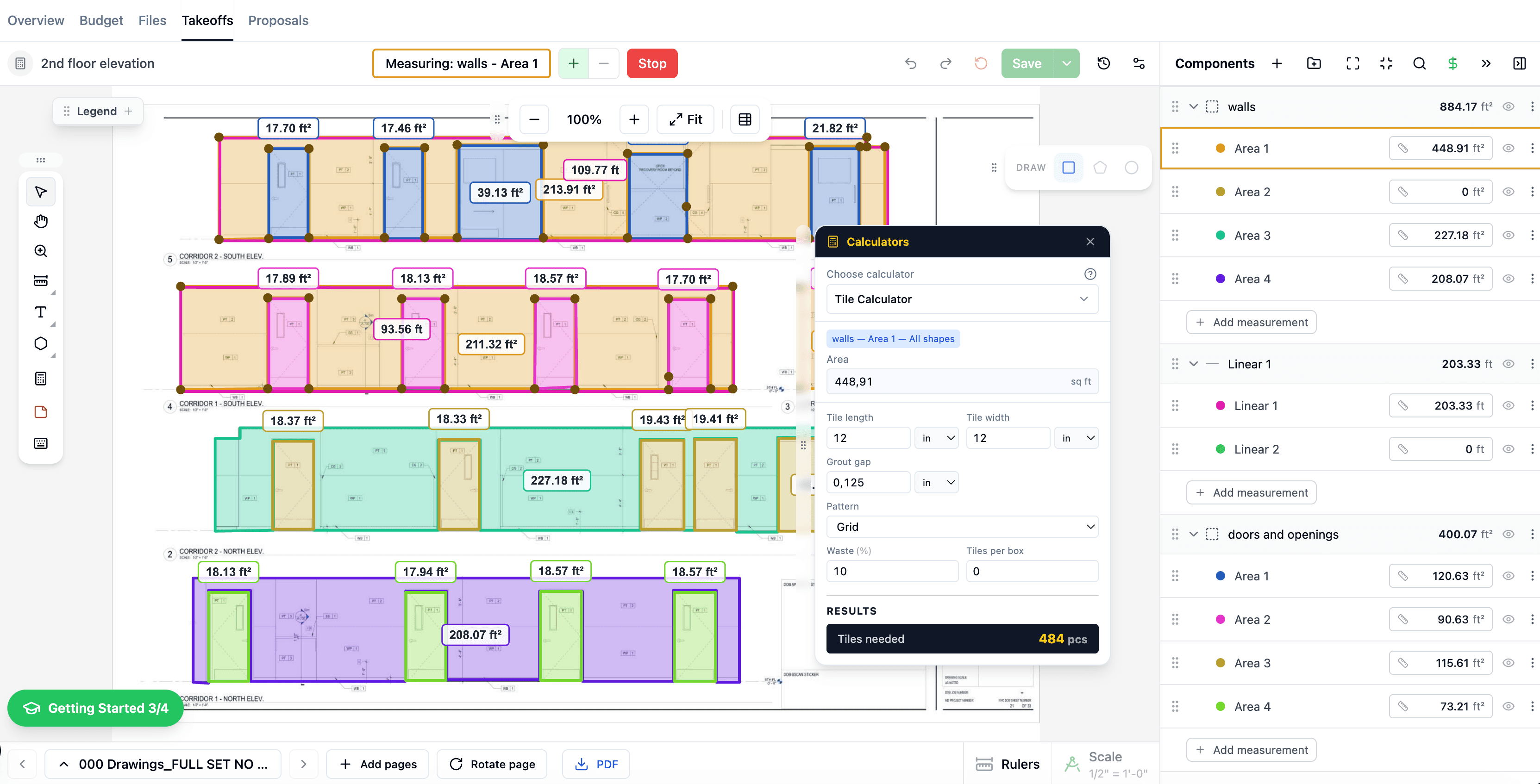
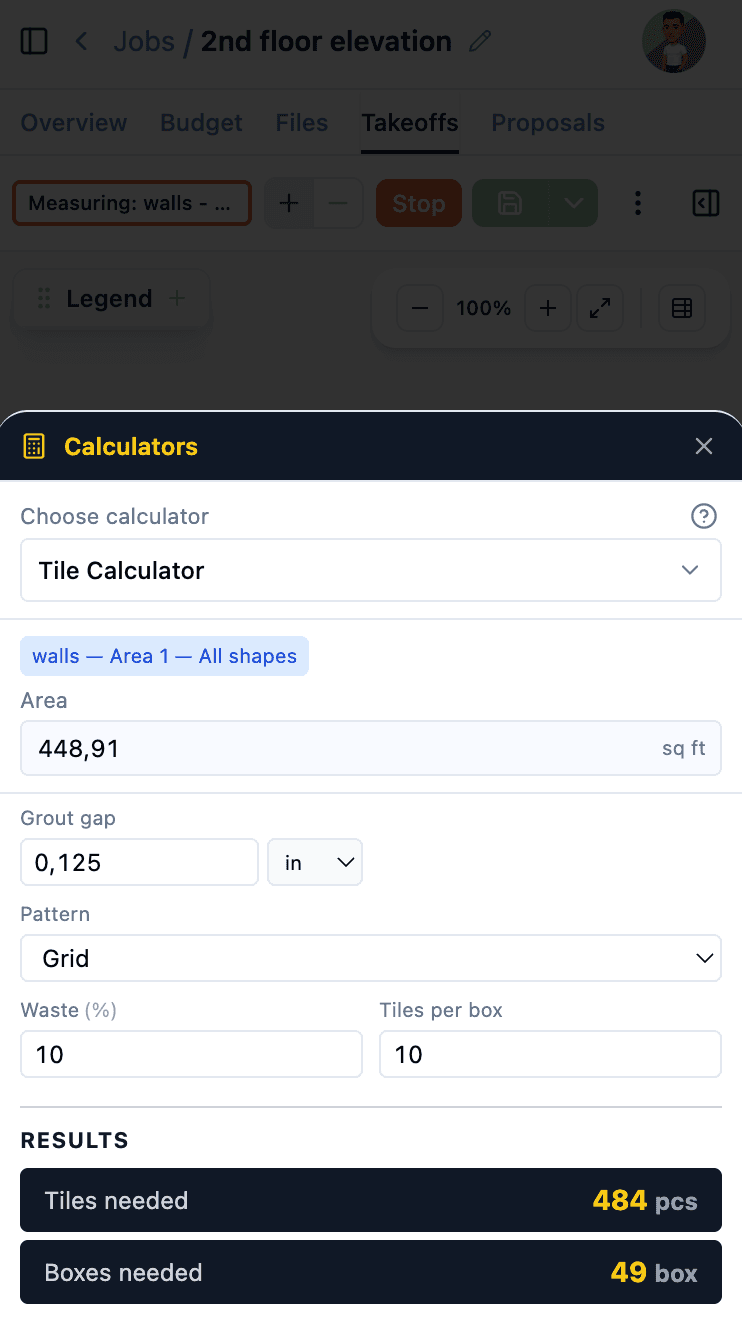
What's actually needed is the construction-specific work — takeoffs, estimates, budgets, proposals, customer records — designed for how a 5-person firm actually operates. Mobile. Cloud. Affordable. Simple enough that one person can run it without a six-month rollout.
That's the gap. It's the reason small construction firms keep showing up at our demos asking why nobody has built the same kind of tool specifically for them.
The point
The construction software conversation has been dominated by enterprise tools for a decade. The pricing, the UX, the marketing, the "industry leader" lists — all of it is calibrated for firms that aren't most of the industry.
The 83% isn't underserved because their problems are smaller. Their problems are the same problems — bidding accuracy, document chaos, customer management, getting paid on time — just at a scale that makes the existing tools the wrong shape.
Until the software industry takes that seriously, the people doing most of US construction will keep doing what they're doing: working around the tools instead of with them.