The Blocks
Why small construction crews still use free calculators in 2026
83% of US construction firms have fewer than 20 employees. Most of them don't have dedicated estimators. They run the numbers themselves — and free online calculators are how.
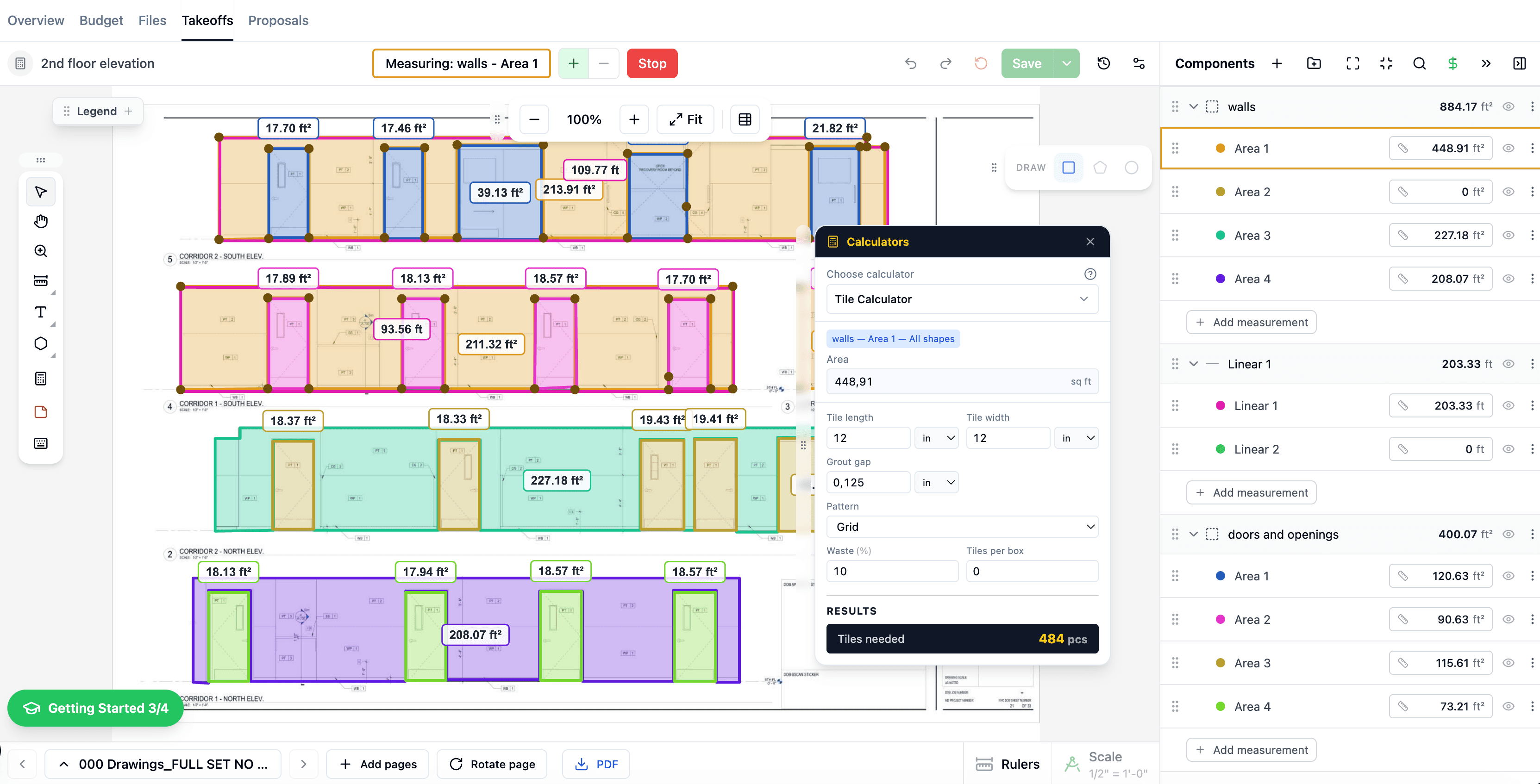
A few months ago we were demoing The Blocks to a 5-person general contractor in New York. We showed them the takeoff tool — the part where you measure plans on screen, with material calculators built right in. Halfway through the demo, almost as a side note, we mentioned that the same calculators are available for free online — no signup, no account.
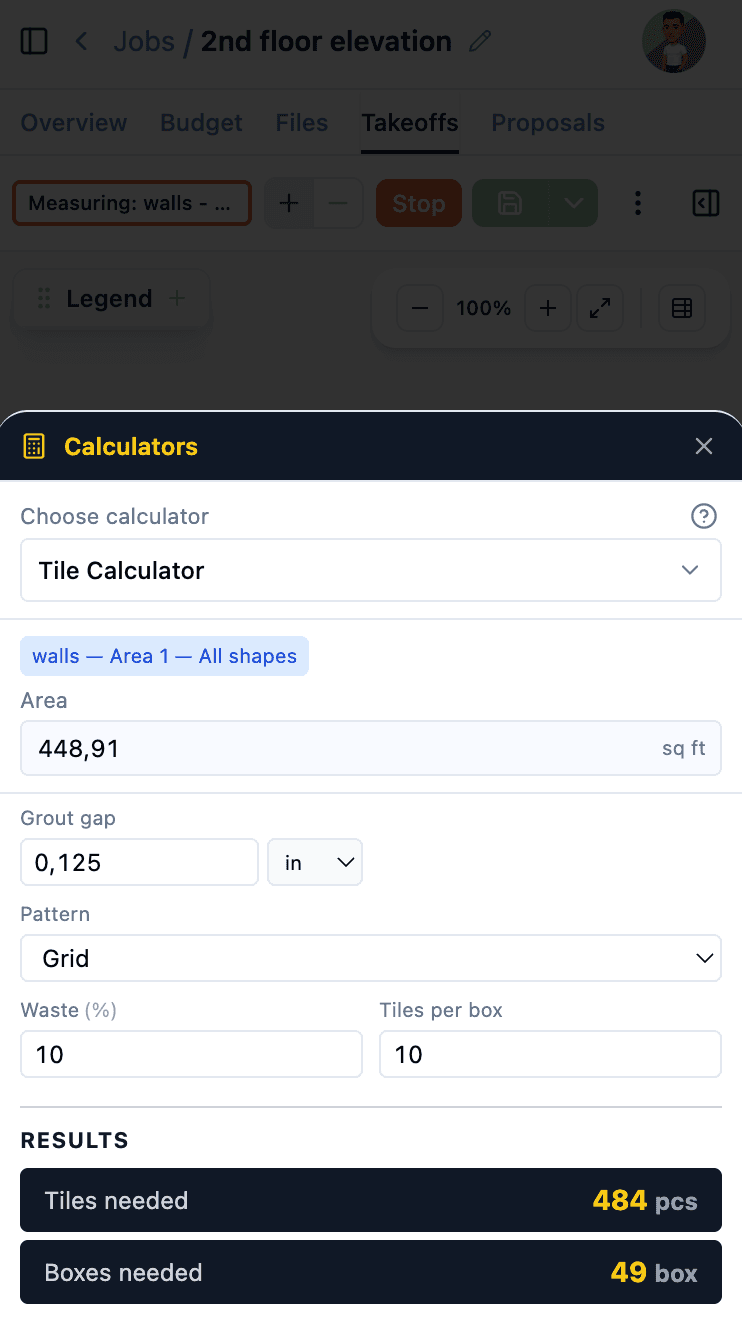
They opened them on their phone before the demo was over. They had an ongoing project, and they started using the calculators in the meeting.
It wasn't a one-off. Every time we show the takeoff tool, the integrated calculators get attention. Every time we mention the free versions, someone wants the link. Drywall and studs is the most asked. Tile and flooring close behind.
That reaction tells us something about how small construction firms actually work — and why a category that looks "saturated" still has obvious demand.
The reality for most US contractors
Roughly 83% of US construction businesses have fewer than 20 employees[^1], and in specialty trades and residential building, more than half have fewer than 5[^2].
There's no dedicated estimating team — just the person running the company, sometimes with help from one office person who handles the paperwork. They send parts of an estimate out to subcontractors to get partial pricing back, then fill the gaps, then put the final proposal together themselves.
That whole pipeline takes time. The person doing it is often the same person bidding the next job, scheduling crews, and dealing with the supplier who short-shipped the rebar yesterday.
So when someone in that role needs a quick number — how many studs in this wall, how many bags of mortar for this masonry job, how much concrete for this footing — they're not going to slow down to open a full project setup. They want the answer, fast, on whatever's closest. Usually that's a phone.
What we keep seeing
The reaction is consistent enough that we now expect it.
Someone is mid-demo. We show a calculator. They lean in. We mention there's a free version online — no signup. Eyes shift from interested to interested. They want the link before we finish the sentence.
What we hear:
- "Can my whole crew bookmark this?"
- "Do you have one for [specific material]?"
- "Is there a flooring one?"
- "What about drywall?"
We added some of our most-asked calculators specifically because customers brought them up in interviews. They were already searching for them. They just couldn't find ones that were actually fast and ungated.
The calculators we hear about most
Based on actual customer requests and the calculators we see used most:
- Drywall — quantities, screws, joint compound
- Framing / studs — board feet, lumber for walls
- Tile — square footage with grout gap + waste pattern
- Flooring — hardwood, laminate, vinyl with layout waste
- Concrete — cubic yards + 80lb bags for slabs and footings
- Rebar — bars, linear feet, spacing layouts
- Roofing — converting flat area to actual roof area with pitch
All free. No signup, no email. Mobile-first. Available at theblocks.app/apps/calculators.
We also build a few field tools that use phone sensors directly — a digital spirit level, a plumb bob, an angle measurement tool, a color sampler. Not calculators in the math sense, but the same category of thing: free, in-pocket, no setup.
Why we built them
We didn't build the free calculators because we expected to make money from them. We built them because we kept watching small contractors reach for whatever was closest to their thumb to do quick math — and the existing free options were often slow, hidden behind ads, or missing the formula entirely.
Calculators aren't innovative tech. They're just useful. For most small contractors, that's the bar — and it's a bar most software still doesn't clear.
If you want to try ours, they're at theblocks.app/apps/calculators — no signup, no email, just answers.